

Is Ronda, Spain Worth Visiting? (+18 Best Things to Do)
Set among surrounding mountains and valleys, Ronda is as dramatic as it is spectacular.
I´ve been many times to Ronda as it is a short drive from Málaga and I always keep coming when I want to unwind and enjoy a day away from home.
In this guide, you´ll find the best things to do in Ronda and at the end of the article you´ll find some practical information, including when to visit Ronda, how to get to Ronda and where to stay in Ronda.
So, is Ronda worth visiting?
Let´s discover what Ronda in Spain can offer, and tell me if I´ve persuaded you that it is!
Disclaimer: This post contains affiliate advertising links. This means that if you click through any of the links on this page and decide to make a booking I get a small commission, at no extra cost to you. This helps fund the running costs of my site.
Is Ronda, Spain Worth Visiting?
The short answer is yes! Ronda is worth visiting!
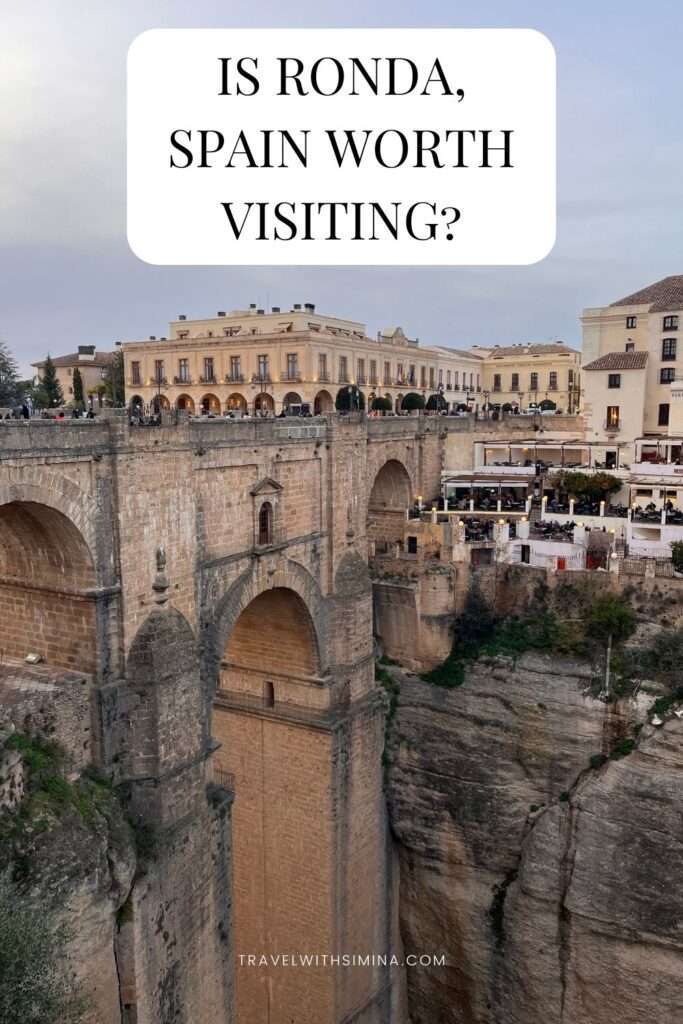
Ronda is one of the most visited destinations in the whole of Andalusia due to its pueblos blancos (white villages) vibes, and its photogenic El Tajo Gorge connected by the New Bridge widely recognised by people around the world.
The village is situated on a mountain plateau in the province of Málaga, Andalusia. 1.8 million visitors visited Ronda just in 2023, so, after all, they cannot be wrong, right?
Ronda has been an inspiration for many artists and writers, including Ernest Hemingway and George Eliot, seeking the beauty and romance of the mountainous village with its narrow streets and white buildings.
Hemingway said that Ronda “is where you should go if you ever go to Spain on a honeymoon or if you ever bold with anyone. The entire town and as far as you can see in any direction is romantic background”.
Ronda in a Nutshell
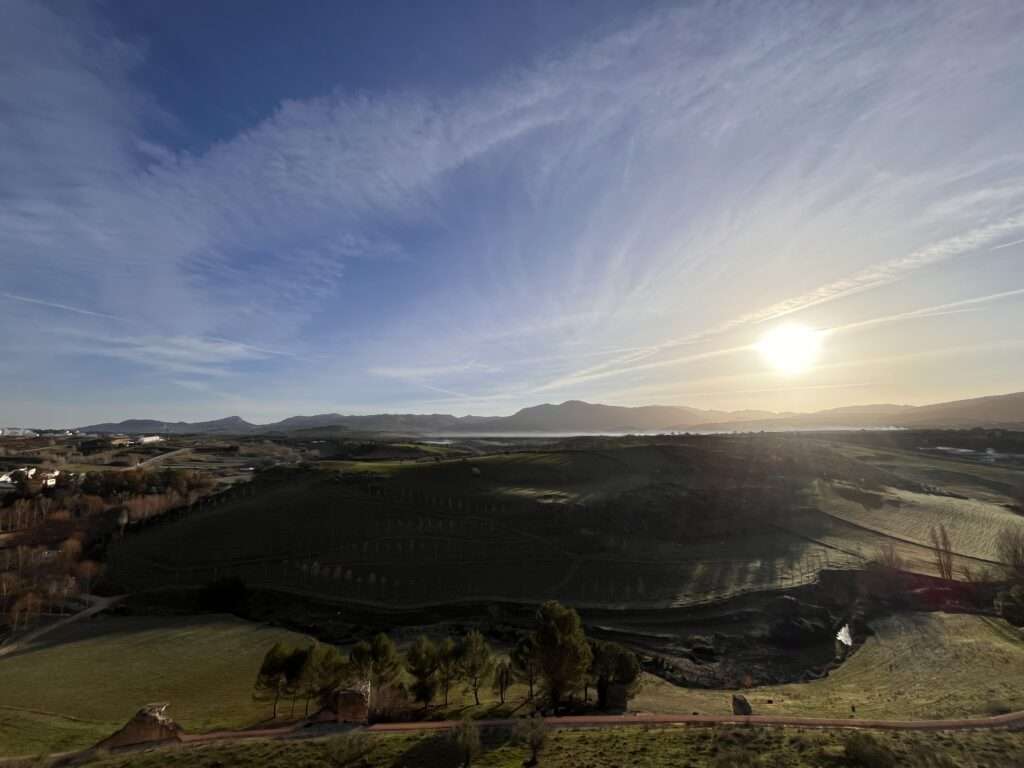
Ronda, Spain, traces its origins back to the Neolithic period when the first settlers of Ronda, named the village Arunda. The Romans strategically established it due to its elevated location, offering defensive advantages.
During the Moorish period from the 8th to the 15th century, Ronda thrived as a cultural and intellectual centre under Islamic rule. The Arab Baths and the town’s layout reflect the influence of Moorish architecture and urban planning.
The Catholic Monarchs, Ferdinand and Isabella, captured Ronda in 1485 during the Reconquista, marking the end of Moorish rule. The subsequent centuries saw a transformation as Christian rulers left their imprint on Ronda’s architecture and traditions. Iconic structures like the Puente Nuevo (New Bridge) and Plaza de Toros (Bullring) were built during this time.
During the 19th century, Ronda became a popular destination for romantic travellers, who would visit Ronda as part of the Grand Tour of Europe which was popular with young upper-class travellers.
Today, Ronda´s population is around 35,000 people.
The Best Things to Do in Ronda, Spain
Puente Nuevo (New Bridge)
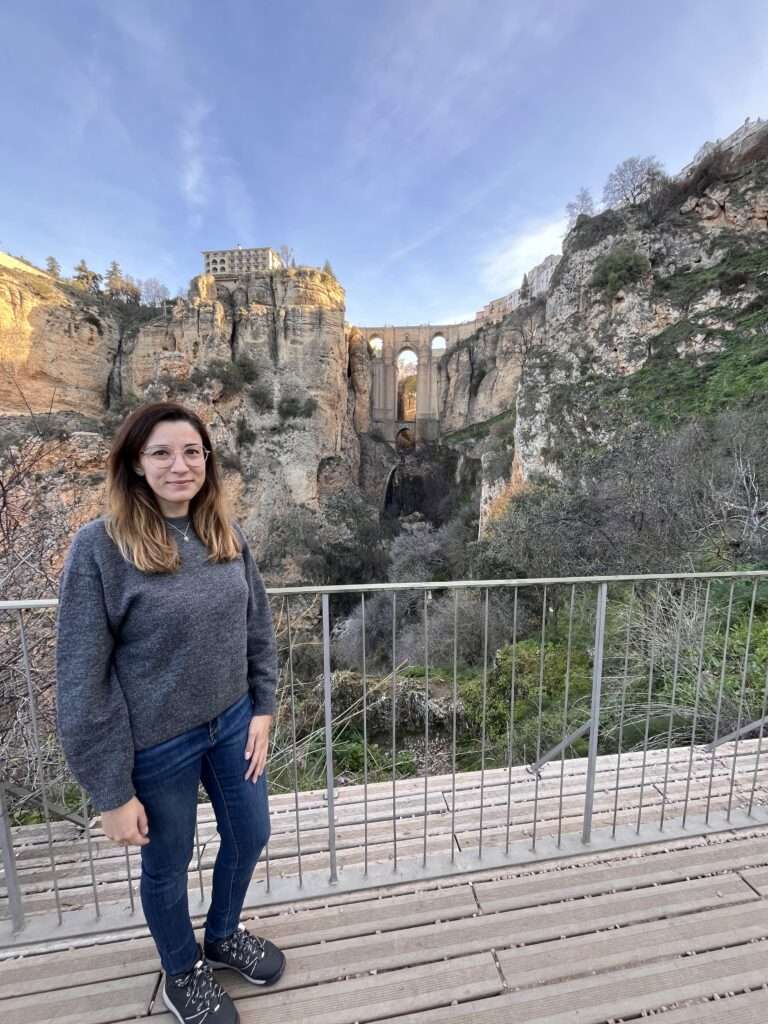
Puente Nuevo, translated as “New Bridge,” was constructed over the El Tajo gorge, connecting the old Moorish town and the newer, 18th-century part of Ronda.
Despite its name, it’s over 230 years old and took more than 40 years to build. A few years after the reconquest, when the market districts of Ronda were forming, the citizens of Ronda requested a bridge that would link the city to the highest point in the gorge.
The bridge is the main tourist attraction of Ronda recognised for its 100 meters down into the depths of the gorge.
Crossing the Puente Nuevo provides breathtaking panoramic views of the El Tajo Gorge and the surrounding mountains, but if you want to take the best photos you’ll have to walk down the Tajo Gorge.
Walk Down the Tajo Gorge
One of the best ways to see the New Bridge is to walk down the Tajo Gorge!
The descent gives a progressive perspective of the Puente Nuevo witnessing the bridge from different angles.
Wear comfortable shoes suitable for walking, as the descent involves navigating uneven pathways.
Plaza de Toros (The Bullring)
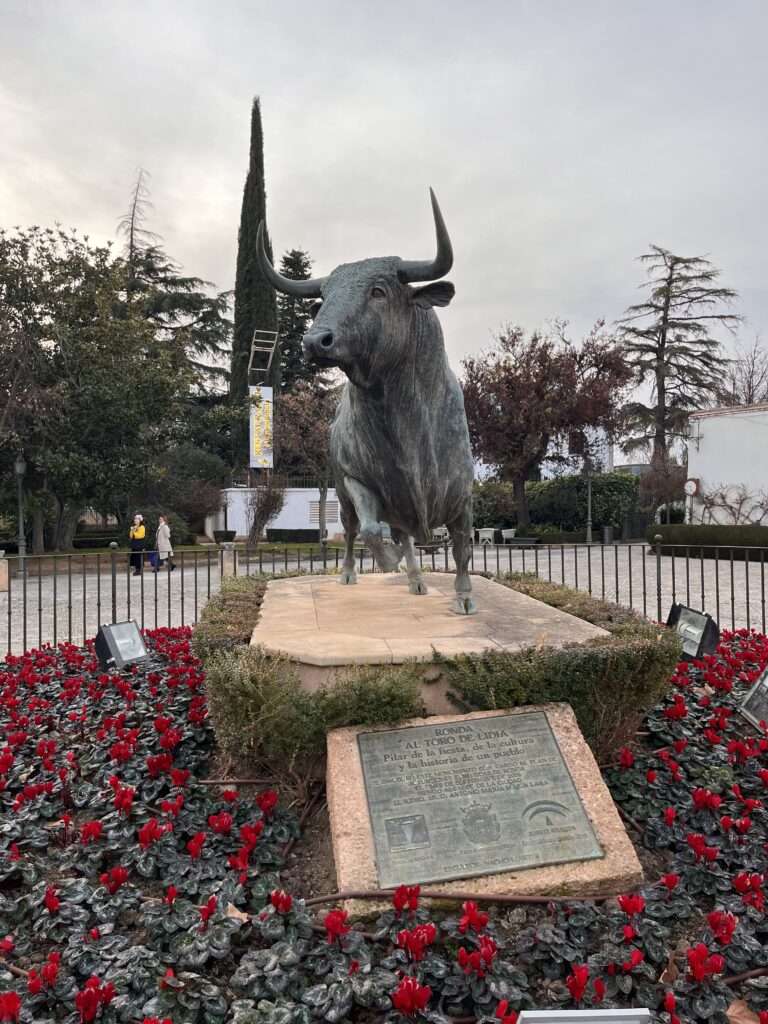
Ronda is supposed to be the birthplace of bullfighting and dating from 1785, Plaza de Toros of Ronda is Spain´s oldest bullring.
It holds 5000 people and it was built by the same architect as the New Bridge, Jose Martín Aldehuela. Outside you´ll find the statue of Antonio Ordoñez, a famous bullfighter from Ronda, as well as a real-life-size bull.
There´s only one fight held every year at the Plaza del Toros, as part of the Feria de Pedro Romero festival in September or you can visit the bullring for 8 euros.
Admire the views from the Alameda del Tajo
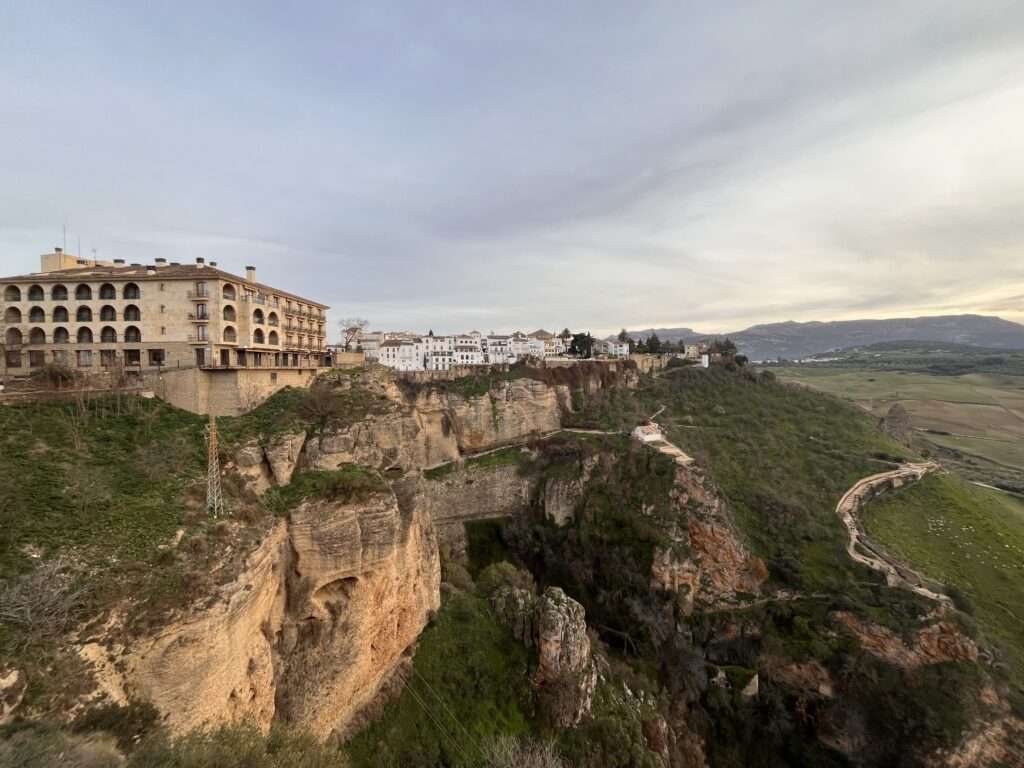
Behind the Bullring you´ll find the Paseo de Blas Infante from which you can admire panoramic views of the landscape.
It’s worth continuing walking just a bit further down the walk to the Paseo de los Ingleses observation deck to find a couple of view balconies perched at the gorge’s edge. Spanish slang says, “Coño!” when you look out from one of these balcony viewpoints, you can see the gorge’s edge.
Explore the Arab Baths

The Arab Baths of Ronda, known as the Baños Árabes de Ronda in Spanish, is an example of Moorish architecture that was built during the Moorish rule.
The baths were an essential part of Moorish daily life and served as places of relaxation, hygiene, and socialization.
The baths are organized around a series of rooms, including a vestibule, a cold room (frigidarium), a warm room (tepidarium), and a hot room (caldarium).
Plaza de España

The Plaza de España in Ronda is situated near the Puente Nuevo (New Bridge), one of the city’s most famous landmarks that spans the dramatic Tajo Gorge.
It features a central square surrounded by traditional Andalusian buildings, some of which house shops, cafes, and restaurants.
In the centre of the square, you can find the statue of Rios Rosas, Ronda´s son who was a Spanish speaker, jurist and politician in the Congress of Deputies.
The Mondragon Palace (Palacio de Mondragón)
The Mondragon Palace is one of the most significant architectural landmarks in Ronda dating back to the 14th century when it was constructed.
It served as the residence of various Moorish rulers and later underwent renovations and additions during the Christian Reconquista of Spain. The palace is named after Abomelic, also known as Al-Mundari, a Moorish king who resided in Ronda.
The palace features a central courtyard with a beautiful garden, surrounded by galleries and rooms adorned with decorative elements typical of Moorish design.
A stroll through the historic quarter
Wander through the narrow, winding streets of the old town, filled with white-washed buildings and charming squares. It’s a great place to soak in the local atmosphere.
Try delicious local food
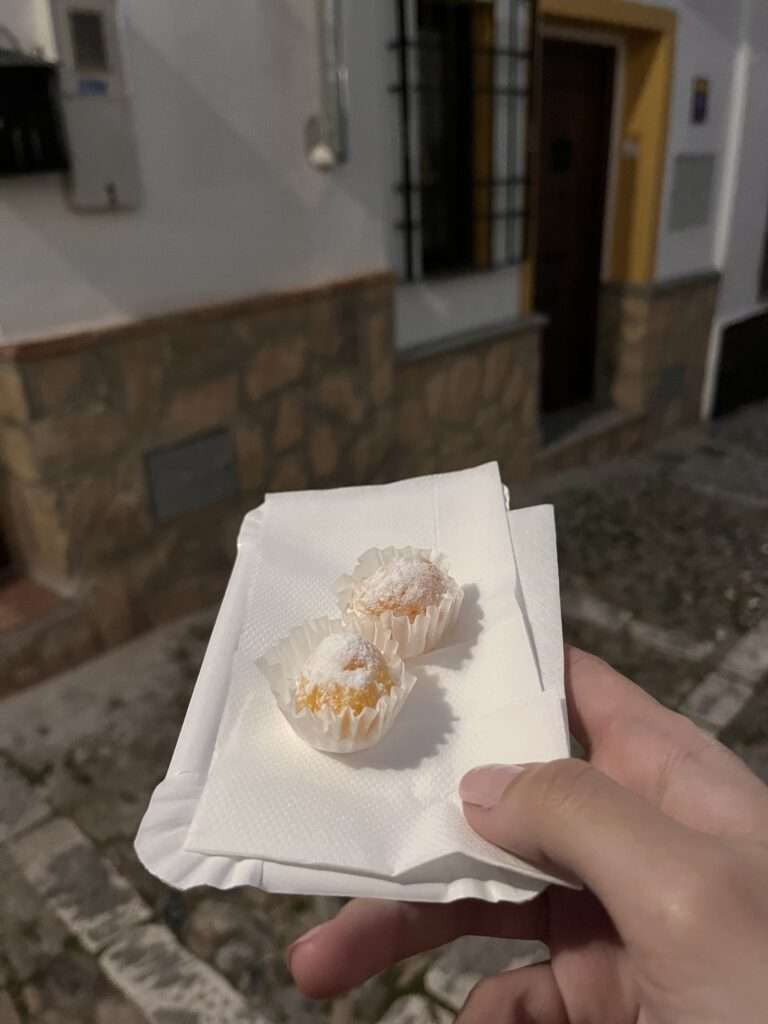
Ronda is known for its delicious tapas, wines, and traditional Spanish dishes.
Traditional tapas in Ronda may include classics like patatas bravas (fried potatoes with spicy tomato sauce), gambas al ajillo (garlic shrimp), boquerones (marinated anchovies), and albóndigas (meatballs).
The region produces a variety of wines, including reds, whites, and rosés. Look for local Ronda wines made from grapes grown in the nearby Serranía de Ronda region, known for their quality and unique flavour.
Indulge your sweet tooth with traditional Andalusian desserts. Ronda offers delights like pestiños (honey-coated pastries), borrachuelos (deep-fried pastries filled with sweet wine), and torta de aceite (olive oil cakes), but the most popular one is the yemas del tajo made with the yellow of the egg, water and sugar.
Indulge in authentic Andalusian cuisine at local restaurants like Tropicana, Casa María, and Las Maravillas.
Museo Lara
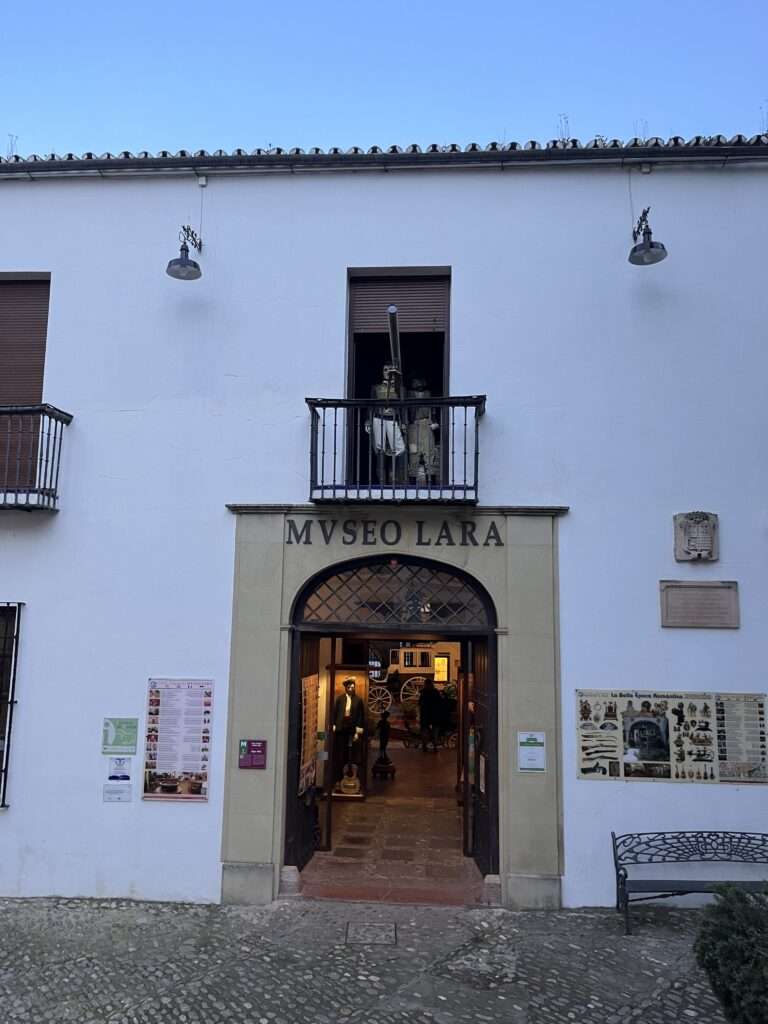
The Museum Lara is housed within the historic Lara family mansion, a beautiful 18th-century building located in the heart of Ronda’s old town.
The Museum Lara is named after the Lara family, who were prominent residents of Ronda and owned the mansion where the museum is located. It’s home to a diverse collection of artefacts and exhibits spanning a wide range of topics, including archaeology, ethnography, decorative arts, and local history.
Iglesia de Santa María de la Encarnación la Mayor
The Santa María Church has a rich history dating back to the 15th century when construction began on the site of a former mosque, following the Christian reconquest of Ronda from the Moors.
It underwent various renovations and expansions over the centuries, with its current appearance reflecting a mix of architectural styles, including Gothic, Renaissance, and Baroque.
Right in front of the church, you’ll find Plaza Duquesa de Parcent. The plaza was originally part of the gardens belonging to the Palacio de Mondragón, a historic palace located nearby.
Plaque of the Romantic Travelers

The Plaque of the Romantic Travelers serves as a tribute to the group of Romantic-era travellers who visited Ronda during the 19th century. These travellers included writers, poets, and artists who were drawn to Ronda’s dramatic scenery and historic charm.
Among them, Washington Irving (writer of Sleepy Hollow) writes, “There has been a storm tonight, wind and rain. I look out the window: the effect of the moonlight breaking the fog on the bridge is beautiful. White houses hang, which follow the course of the river at the bottom of the abyss.”
The plaque features an inscription in Spanish, which pays homage to the Romantic-era travellers who visited Ronda and celebrates their contribution to the town’s cultural heritage.
Jardines De Cuenca (Cuenca Gardens)
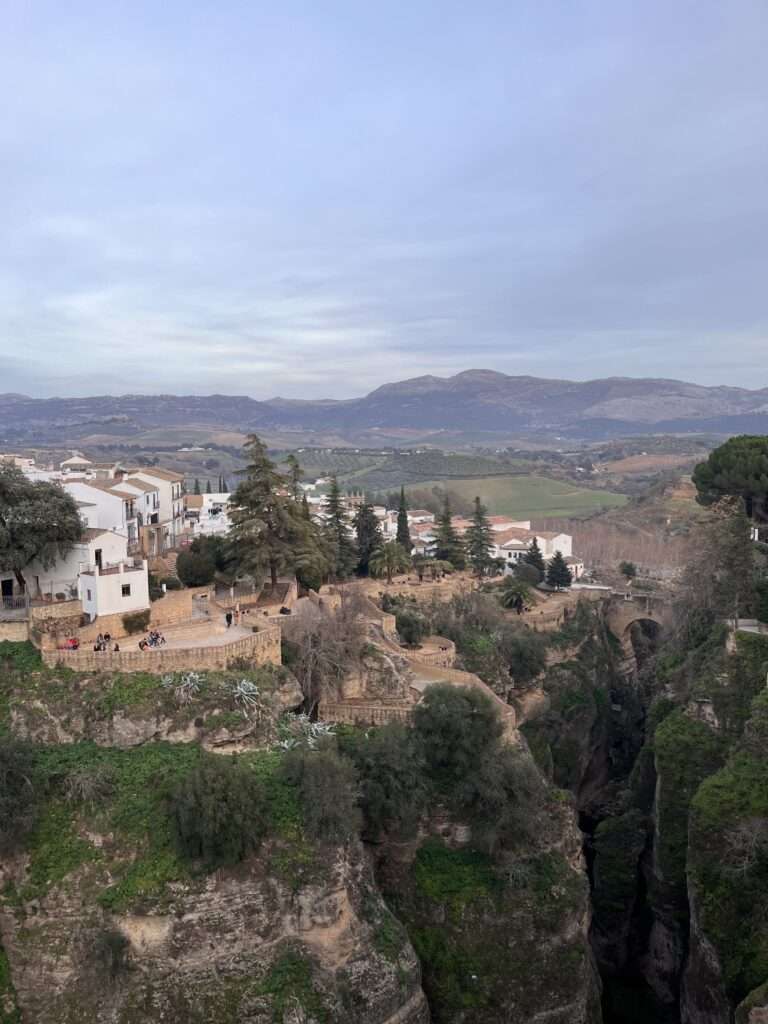
The Jardines de Cuenca, or Cuenca Gardens, is a beautiful public park located on the edge of the Tajo Gorge.
You can admire the gorge from the other side of the bridge and the river below with the rugged cliffs. Just relax and have a stroll connecting with nature.
Convento de Santo Domingo (Palacio de Congresos de Ronda)
The Convento de Santo Domingo dates back to the 16th century when it was founded by the Dominican Order of Friars.
The convent was built on the site of a former mosque, following the Christian reconquest of Ronda from the Moors. Over the centuries, the convent underwent various renovations and expansions, reflecting different architectural styles.
Minaret of San Sebastian
The minaret served as a prominent feature of the town’s mosque, which stood on the site of the present-day Church of San Sebastian.
Following the Christian reconquest of Ronda in the 15th century, the mosque was converted into a church, and the minaret was preserved as a symbol of the town’s multicultural history.
Walls of Ronda

The Walls of Ronda, also known as the Murallas de Ronda in Spanish, are ancient fortifications that once surrounded the historic town of Ronda.
There are several gates and towers, each serving as strategic points of defense. One of the most notable gates is the Puerta de Almocábar, a medieval gatehouse that still stands today.
The Carmelite Convent or The Secret Bakery

The Carmelite Convent in Ronda dates back to the 16th century when it was founded by the Catholic Monarchs, Queen Isabella I of Castile and King Ferdinand II of Aragon.
While the convent is not open to the public, you can attend Mass and other religious services held at the convent’s church.
The Carmelite Convent in Ronda is also known for its “Secret Bakery” or “Convent Bakery,” where the nuns bake traditional sweets and pastries using age-old recipes passed down through generations.
They are often sold to the public as a means of supporting the convent and its charitable activities. Visitors to Ronda can purchase these delicious treats from the convent’s bakery, which is located near the convent or at local markets and shops.
Shopping on Carrera Espinel
Carrera Espinel, also known as Calle La Bola, is one of the main shopping districts in Ronda. There´s fashion boutiques, artisanal craft shops, jewelry stores, souvenir shops, and more. Whether you’re looking for stylish clothing, unique gifts, or locally made handicrafts, you’ll find plenty of options to choose from.
Practical Information
Travelling to Spain
Make sure to check the entry requirements for Spain, including visa requirements, passport validity, and any travel restrictions or requirements. Requirements may vary depending on your nationality and the purpose of your visit.
Spain has a well-developed transportation network, making it easy to travel within the country. You can choose from various transportation options, including flights, trains, buses, and rental cars, depending on your preferences and itinerary. High-speed trains (AVE) connect major cities, while buses and regional trains provide access to smaller towns and rural areas.
How to get to Ronda
Ronda is is accessible by various modes of transportation. Here’s how you can get to Ronda:
- By Car: Ronda is easily accessible by car from major cities in Andalusia and other parts of Spain. The town is connected to the A-374 and A-367 highways, which provide convenient access from cities like Málaga, Seville, and Cádiz. The drive to Ronda from Málaga takes approximately 1.5 to 2 hours, depending on traffic and road conditions.
- By Train: Ronda is well-connected to the Spanish railway network, making it possible to travel to the town by train. Renfe operates regular train services to Ronda from cities like Málaga, Seville, and Córdoba. The train journey offers scenic views of the Andalusian countryside and typically takes around 2 to 2.5 hours from Málaga or Seville.
- By Bus: Ronda is served by several bus companies that operate routes connecting the town to neighboring cities and towns. ALSA and Avanza are two of the main bus companies that provide bus services to Ronda from cities like Málaga, Seville, Granada, and Cádiz. The bus journey duration varies depending on the departure point, but it generally takes around 2 to 3 hours from Málaga or Seville.
- By Tour: Alternatively, travelers can opt to join guided tours or day trips to Ronda from nearby cities like Málaga, Seville, or Granada. These tours typically include transportation, guided visits to Ronda’s main attractions, and free time to explore the town at leisure.
When to visit Ronda
Ronda has a Mediterranean climate with hot summers and mild winters.
Summers are dry and hot, with temperatures often exceeding 30°C (86°F). The high season also coincides with the summer months when Europeans take their summer holidays.
Spring and autumn offer milder temperatures and is the time I would recommend you to visit. The weather is much cooler than in summer, there are less crowds and lower hotel rates.
Where to stay in Ronda

There’s many accommodations you can chose from and some of the best rated are the following ones:
Hotel La Fuente de la Higuera > Surrounded by olive groves near Ronda, it’s a luxurious, rural property where you can relax and enjoy beautiful views of the Andalusian countryside.
Hotel Boutique Molino del Arco > This is a beautiful typical Cortijo Andaluz from the beginning of the 18th century.
Catalonia Ronda > Located in the city centre, the hotel features an infinity pool, hot tub, and a rooftop terrace with views of the square and Tajo de Ronda.
Is Ronda in Spain Worth Visiting?
The final answer is a definitive YES! You´ll fall in love with its dramatic landscape and hundreds of ancient history!
In conclusion, Ronda is worth visiting for its stunning landscapes, rich history, and cultural charm.
If you appreciate history, nature, and a slower pace, Ronda could be a perfect destination for you. Consider the factors mentioned before planning your trip to ensure it aligns with your travel style and expectations.
Final Thoughts
I always recommend staying a night or two in a destination to experience the destination during the quieter hours and experience the true soul understanding the place you´re visiting.
However, if you do visit Ronda for one day, then I recommend taking a guided tour to get a grasp of the town and learn as much as possible.
Below are some of the best picks from GetYourGuide for Ronday day tours. Please note that I haven´t personally been on these specific tours, so do read the reviews carefully to be sure is something you´re looking for.
If you still have any questions, then please don´t hesitate to leave them in the comment section below and I´ll get back to you!
Save for later
Travel Inspiration for Spain

